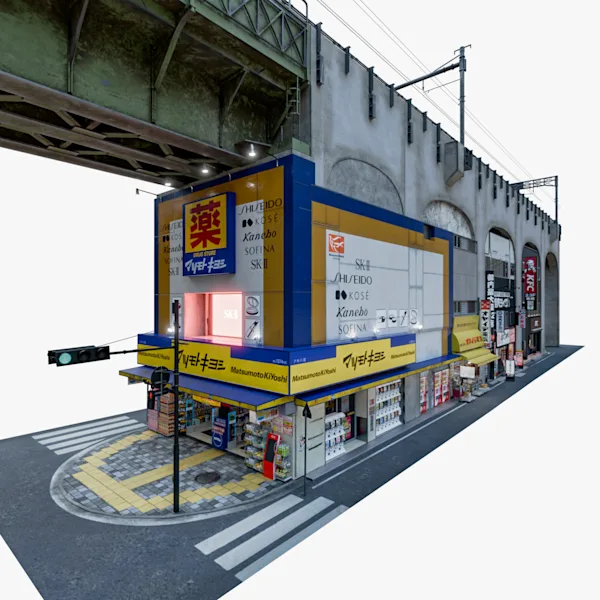
The photo I couldn't stop looking at
I came back from Tokyo with a camera roll full of streets I didn't know how to forget. Buildings stacked on buildings. Vending machines wedged into corners that shouldn't exist. A train passing on a bridge over electronics shops crammed into the arches below. None of it should work. All of it does.
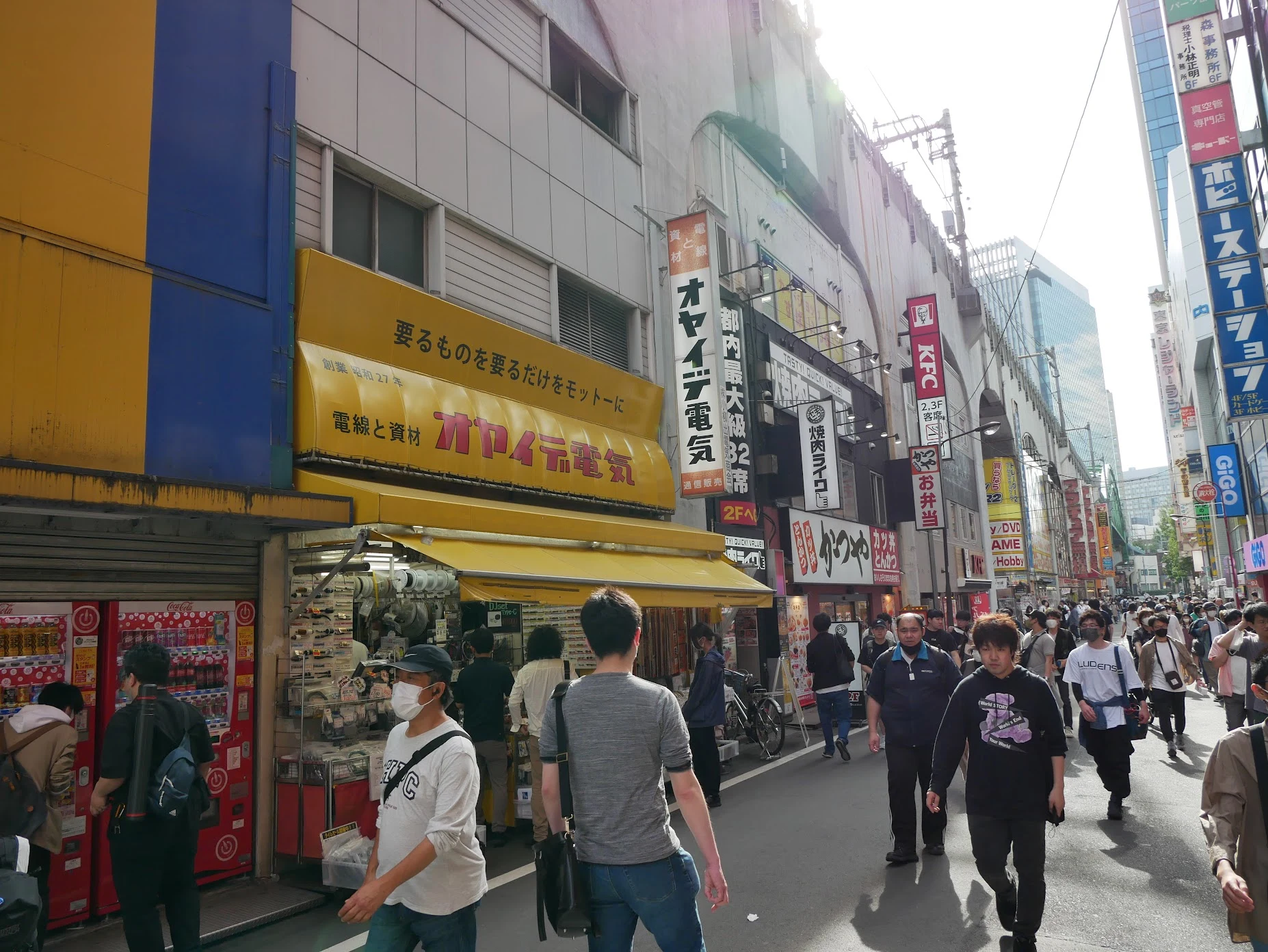
The photo I kept opening was one I'd taken almost by accident. A narrow street in Akihabara — the yellow awning of Oyaide Denki, an electronics cable shop, on the left, a wall of vertical signs on the right. I didn't even mean to take it.
After a few weeks, I asked the question I always ask when I get like this: what would it take to model this?
The answer turned out to be eight months.
Vertical density
Akihabara is vertical density. Every square meter of facade does five things at once. Awnings, signage in three writing systems, vending machines, gachapon, security cameras, AC units, conduit running like veins. None of it was designed. It was added — layer after layer, decade after decade. You can read the timeline of the neighborhood in the stickers on a single vending machine.
That's what I wanted. Not the postcard version. The accumulated, lived-in, no-architect-signed-off-on-this version.
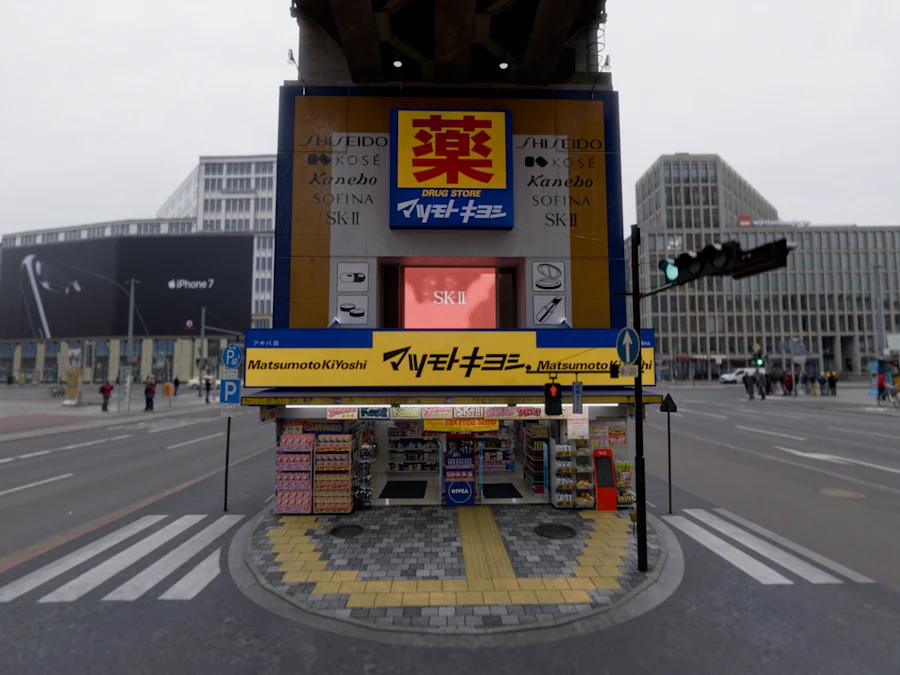
Eight months across three countries
I started this in Italy, kept working on it in Switzerland, finished it in Spain. Stolen evenings between client work, between flights.
The first phase was structural. Before touching a single texture, I blocked out every building volume, every awning, every sign. That's what most people skip. But for a scene this dense, if the proportions are wrong at blockout, nothing else will save it.
The Oyaide Denki problem
The hardest single object was the yellow Oyaide Denki shop. It's the heart of the photo, and the only place a viewer is going to look closely enough to notice if anything is wrong.
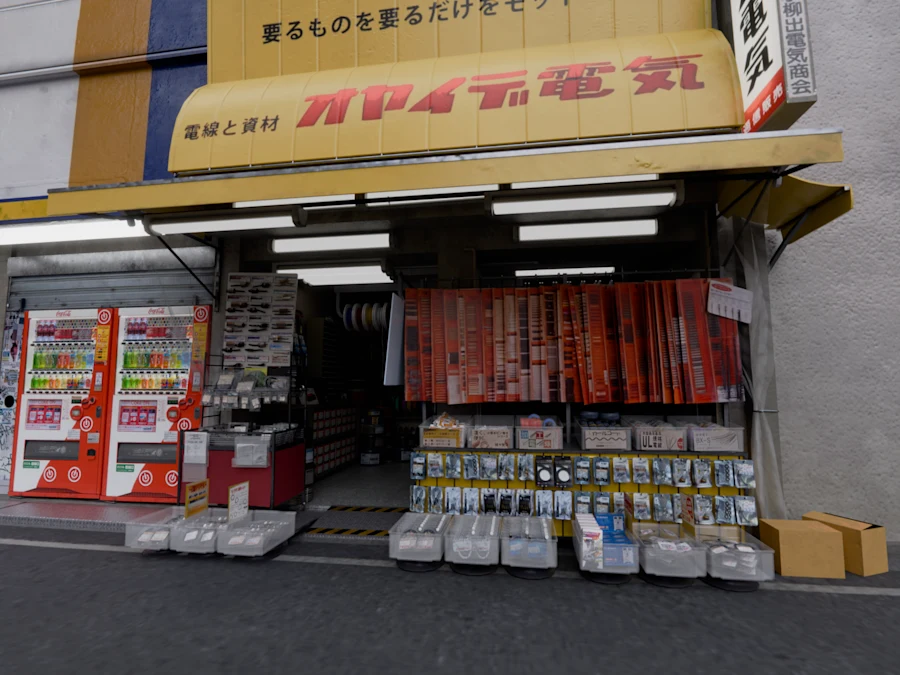
Inside that yellow awning, behind the glass, are hundreds of cable connectors and labeled compartments. Real Akihabara electronics shops are organized chaos. You can't fake it with a flat texture. So I modeled it.
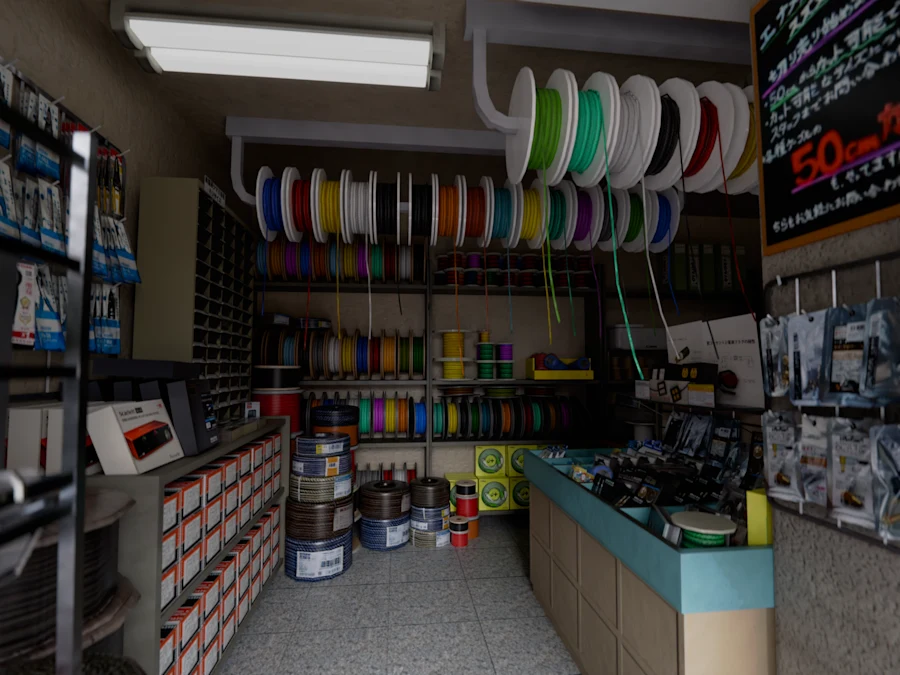
That word — reference — is where most of the eight months went. Every store changes its signage. The KFC sign has a different layout in Japan than in Europe. The "GiGO" arcade used to be SEGA. If you get any of this wrong, anyone who's been there will know — and the people most likely to look at this kind of model are the people most likely to have been.
I spent more time finding reference than modeling.
What I'd do differently
Eight months is a long time. I'm not going to pretend the math works out. I'm still waiting to see whether the time turns into money, or commissions, or attention.
Some projects pay you back in skill instead. This was one of them.
If I started again I'd build a kit of reusable Akihabara shop fronts that could mix into other scenes. That's the business-minded version. But I'd probably still spend too long on the Oyaide Denki shop. That part wasn't about efficiency. It was about getting it right.
That's the trade-off when you decide to model real places instead of generic ones. You pay in months. You get back something nobody can fake.
Working with me
If you have a project that needs real reference and accurate detail — product visualization, environments, architectural scenes — get in touch. You can also browse the Akihabara model on its portfolio page.